
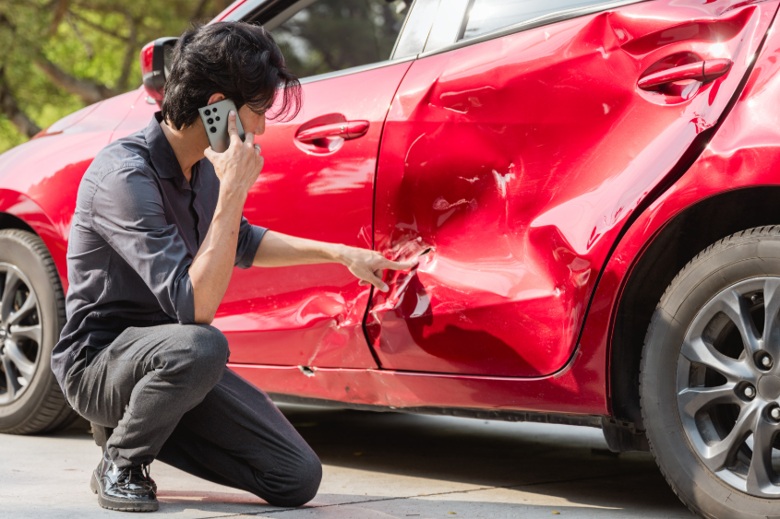
What Do I Do After a Car Accident?
A fender bender on Highway 101, a deer collision on Westside Road, or a parking lot scrape in downtown Healdsburg can leave even calm drivers shaken. The minutes after a crash are stressful, and most people forget half of what they meant to do because adrenaline takes over.
This checklist gives Sonoma County drivers a clear sequence to follow at the scene, a simple way to assess damage afterward, and a straightforward sense of when to call a shop for auto body repair in Healdsburg.
Print it, bookmark it on your phone, or share it with a new driver in the family. It’s a practical reference for a moment when clear thinking matters most.
Key Takeaways
- Safety first, then information. Move to a safe spot, turn on hazards, and check for injuries before doing anything else.
- Photos are the best record. Capture wide shots and close-ups of every angle, plus the other vehicle and the surrounding area.
- Hidden damage is common. Frame, suspension, and sensor damage often doesn’t show on the outside. A professional inspection is the only way to be sure.
- You can choose your own shop. California law gives drivers the right to pick the auto body shop that repairs their vehicle, regardless of what an insurance adjuster suggests.
- Local matters. A certified, experienced shop in Sonoma County can handle the inspection, the insurance paperwork, and the repair in one place.
Information to Gather at the Scene
Once everyone is safe and emergency services have been called if needed, the next 15 minutes are about documentation. The more you collect now, the smoother every conversation that follows will be.
- Photos of the damage from multiple angles. Get wide shots showing both vehicles, then close-ups of every dent, scratch, and impact point. Include the license plates.
- Photos of the scene itself. Skid marks, road conditions, traffic signs, and where the vehicles came to rest all help if liability is disputed later.
- The other driver’s information. Full name, phone number, address, driver’s license number, insurance company, and policy number.
- Vehicle details. Make, model, year, color, and license plate of every vehicle involved.
- Witness contact info. Even one neutral witness can settle a disagreement weeks later.
- The police report number. If officers respond, ask how and when to request a copy.
- Notes on what happened. Write down the time, direction of travel, weather, and a brief description while it’s fresh. Sonoma County weather changes fast, and “light rain on Dry Creek Road at dusk” beats memory alone two weeks later.
Avoid discussing fault at the scene. Stick to facts when speaking with the other driver and police. Anything more can be used against you during the claim.
How to Do an Initial Damage Assessment
Once you’re home or somewhere safe, take a closer look at the vehicle. This step helps you understand what you’re dealing with before calling a shop or filing a claim.
A professional inspection is still needed to confirm the full scope of damage, but a careful walk-around gives a useful starting point.
Visible damage to check
- Body panels. Look for dents, scratches, paint transfer, and misaligned gaps between panels (doors, hood, trunk).
- Bumpers and fascias. Check for cracks, separation from the body, and broken clips underneath.
- Lights and reflectors. Cracks in headlight or taillight housings can let in moisture and short out wiring.
- Tires and wheels. Look for sidewall damage, bent rims, and uneven wear patterns that suggest alignment issues.
- Glass. Inspect the windshield, side windows, and rear window for cracks or chips, even small ones.
- Underbody. If safe, look beneath the car for hanging plastic, dragging splash guards, or fluid leaks.
Signs of Hidden Damage
Hidden damage causes more trouble than visible damage because drivers don’t notice it until something fails. Watch for:
- Fluid leaks. Oil, coolant, or transmission fluid pooling under the car after the accident.
- Warning lights. Check engine, airbag, ABS, traction control, or stability control lights that came on after the crash.
- Steering pull. The car drifts left or right when driving straight on a level road.
- Vibration. New shakes in the steering wheel, brake pedal, or seat at certain speeds.
- Strange noises. Clunks, grinding, or rattles that weren’t there before.
- Doors or hood that don’t close right. Gaps that look off, latches that stick, or rubber seals pulled out of place.
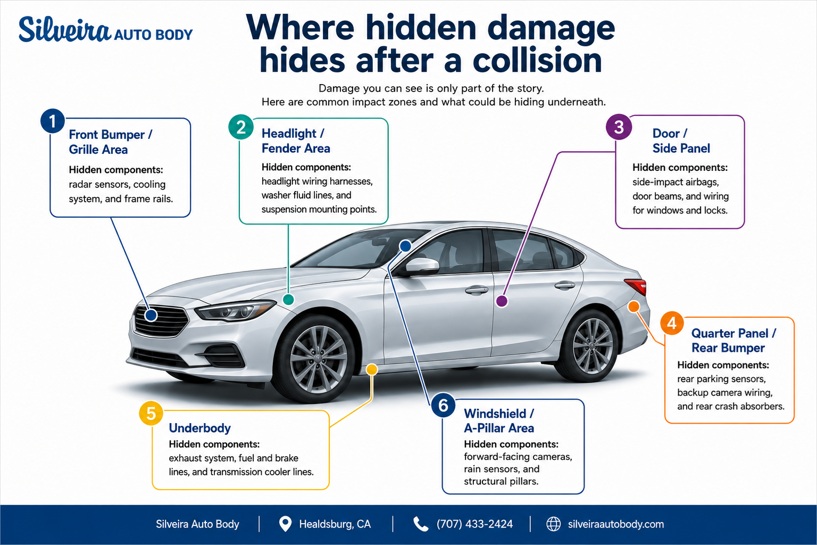
Modern vehicles have sensors, cameras, and structural components behind the bumper and inside the doors. A bumper that looks fine on the outside can still hide damage such as cracked brackets, damaged radar units, or bent frame rails.
A trained eye and the right equipment are the only reliable way to know, which is where professional auto body repair in Healdsburg comes in.
Signs it’s Time to Call an Auto Body Repair Shop
Some accidents are obvious shop calls. Others leave drivers wondering if it’s worth the trip. The list below covers the most common signals that point toward a professional inspection.
- Any airbag deployed. A deployed airbag means the structural sensors registered a significant impact. The vehicle needs a full inspection.
- Fluid is leaking. Any new puddle under the car, especially red, green, or amber fluid, calls for an inspection.
- A warning light is on. Sensor and electronic systems are sensitive to crash forces, and a lit dashboard can point to issues that won’t fix themselves.
- The car drives differently. Pulling, vibrating, soft brakes, or a steering wheel that sits off-center after an accident are all reasons to stop driving and call.
- Body panels are misaligned. Gaps that look uneven, doors that won’t close cleanly, or a hood that sits crooked can point to frame damage.
- You’re filing an insurance claim. A documented shop estimate gives the claim a clear foundation and protects you from a low initial offer.
- You want peace of mind. A free estimate costs nothing and can confirm whether a minor-looking scrape is actually minor.
What to Expect from a Professional Shop
A good shop makes the repair process easier. Knowing what quality looks like helps drivers feel confident in their choice and helps separate strong shops from weak ones.
- A free, written estimate. Detailed, line-item, and clearly explained.
- Certified technicians. Industry credentials such as I-CAR and manufacturer-specific certifications mean the team has trained on current repair methods and materials.
- Insurance claim support. A shop that regularly works with insurance companies can handle the back-and-forth so you don’t have to.
- Clear communication. Updates on parts, timing, and any new issues discovered during the repair.
- Convenience options. Pick-up and delivery, help arranging a rental, and flexible scheduling all reduce the disruption of being without a car.
- A warranty on the work. A shop that backs its repairs in writing stands behind the quality of the work.
California drivers have the right to choose their own repair shop. An insurance company can recommend a shop, but the choice belongs to the vehicle owner.
Start Your Repair with a Free Estimate
If a recent accident has left questions about damage or repair costs, a professional inspection from an experienced Sonoma County shop is the next step.
Silveira Auto Body has served Healdsburg, Windsor, Santa Rosa, and the broader Sonoma County area for over 50 years. The team’s I-CAR Platinum and I-CAR Gold certified technicians repair all makes and models, work professionally with every insurance company, and back every repair with a lifetime warranty.
Free estimates, vehicle pick-up and delivery, and rental vehicle support are all available to make the process easier. For trusted auto body repair in Healdsburg, call Silveira Auto Body at (707) 433-2424 or contact our team online to request a free estimate.
Frequently Asked Questions
Do I have to use the auto body shop my insurance recommends?
No. California law gives vehicle owners the right to choose their own repair shop. An insurance company can suggest a preferred provider, but the final choice belongs to the owner.
How long does collision repair usually take?
Repair times depend on the extent of damage, parts availability, and any hidden issues discovered during the work. A minor bumper repair might take a few days, while structural and paint work can take 2 to 4 weeks or longer. A written estimate will include a projected timeline.
Will my car look the same after collision repair?
A certified shop using factory parts and proper procedures can return a vehicle to factory condition. Paint color matching, panel alignment, and structural integrity all depend on the shop's training, equipment, and attention to detail.

Owner / President, Silveira Auto Body
Scott Silveira is the Owner and President of Silveira Auto Body. Silveira Auto Body has been a body shop performing high quality repairs on vehicles in Healdsburg, Windsor, Santa Rosa and throughout Sonoma County for over 50 years. In 1964, the Silveira family added the body shop to their already thriving car dealership business, which was established in 1954.
With our skilled and certified technicians, we proudly repair all makes and models of vehicles. Our goal is to repair your vehicle to factory condition while making the process quick, safe and convenient for you.
Over 90% of our business comes from repeat customers or referrals. We work professionally with insurance company claims, enjoy dealership affiliations, and perform fleet repairs.

