
How Do You Protect Fresh Paint After an Auto Paint Repair?
Picking up your vehicle after collision work feels great. The dents are gone, the paint matches, and your car looks almost new again. The first 30 to 90 days matter more than most drivers realize, though.
During this stretch, fresh paint is still curing, body panels need gentle treatment, and a few small decisions can protect the quality of your auto paint repair in Healdsburg for years to come.
Key Takeaways
- Automotive refinish paint can take 30 to 90 days to fully cure, so the first few months call for gentler care
- Hand wash only with mild soap and cool water during the first 30 days, and skip automatic washes
- Wait at least 30 days before waxing or polishing, and 60 to 90 days before applying a ceramic coating
- Remove bird droppings, tree sap, and bug splatter the same day you spot them to prevent etching
- Watch for color changes, peeling, panel shifts, or rust bleed in the first year and call the shop early
The First 90 Days: Why Fresh Repairs Need Extra Attention
Fresh paint looks dry within a few hours. The surface actually keeps curing underneath for weeks. Automotive refinish paint is a layered system of primer, basecoat, and clearcoat, and the clearcoat is still hardening long after the car leaves the booth.
Full cure typically takes 30 to 90 days depending on:
- Paint type
- Humidity
- Temperature
During this time, the finish is more vulnerable to chemicals, abrasion, and anything that traps heat or moisture against the surface. Repaired body panels, trim pieces, and seams can also need a short settling-in period before you give them the full car-wash treatment.
A little patience in the first 90 days protects years of quality.
How to Inspect Your Vehicle When You Pick It Up
Before you drive off the lot, slow down and look over the work. A thorough pickup inspection catches small issues while the shop can address them on the spot.
Walk around the vehicle in good natural light. Check for:
- Color match between the repaired panel and surrounding areas
- Smooth paint texture with no visible overspray, dust nibs, or orange peel
- Even panel gaps and alignment around doors, hood, and trunk
- Properly reattached trim, badges, and moldings
- Clean glass and no residue from masking tape
Open and close every door, the hood, and the trunk. Listen for grinding or binding. Test turn signals, headlights, and any interior electronics that touched the repair zone. If something looks off, mention it before you leave.
Pro Tip 💡: Take a few photos of the repaired area at pickup. Those photos become a baseline if a question comes up weeks later.
How to Be Gentle When Washing Recently Repaired Areas
Washing causes most aftercare problems in the first 30 days. The clearcoat is still curing, and harsh methods can leave swirl marks, dull spots, or water intrusion along fresh seams.
Stick with these habits for the first month:
- Hand wash only. Automatic car washes with brushes can scratch soft paint, and high-pressure wands can force water into fresh seals
- Use a mild, pH-neutral car soap. Dish detergent and household cleaners strip protection
- Rinse with cool water, not hot
- Use a clean microfiber mitt and a separate microfiber towel for drying
- Wash in the shade so soap and water do not dry on the surface
- Avoid directing high-pressure spray at seams, moldings, or the edges of a repaired panel
Air drying or blotting with a clean microfiber towel beats automated dryers for the first month.
Ask Before Waxing, Polishing, or Applying a Ceramic Product
Waxing, polishing, and ceramic coatings form a seal on top of the paint. Applying any of them too early traps solvents that are still trying to evaporate out of the clearcoat, which can cause hazing, discoloration, or soft spots in the finish.
Common guidance for fresh automotive paint:
- Wait at least 30 days before waxing or using a polish
- Wait 60 to 90 days before applying a ceramic coating or paint sealant
- Check with the repair shop first, since cure times depend on the specific paint system used
Before you book a detailer or buy a coating kit, call Silveira Auto Body. A quick conversation can save a costly reapplication later.
How to Protect the Finish from Everyday Contaminants
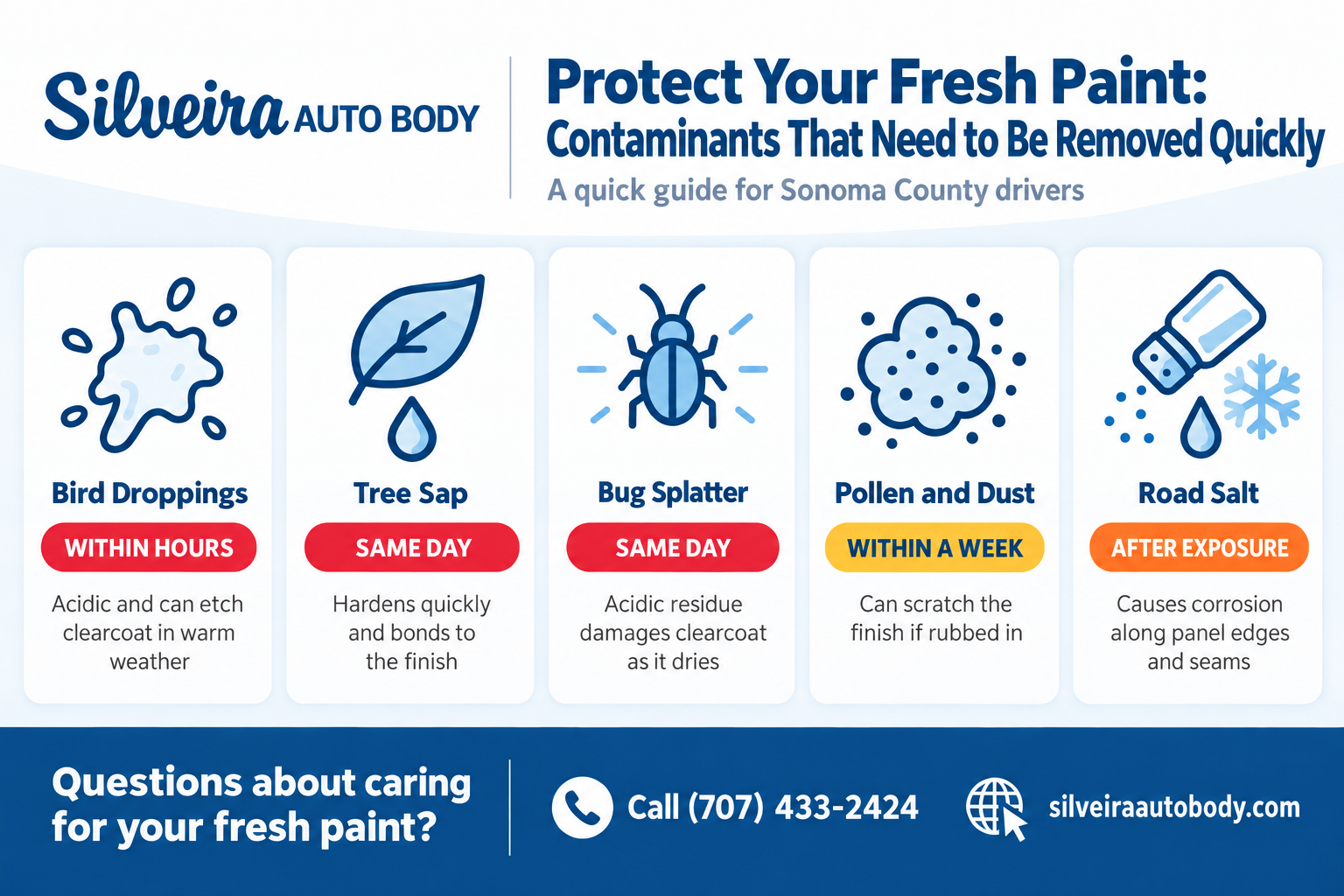
Sonoma County driving has its own set of paint hazards. Vineyard dust, oak pollen, bird droppings from tree-lined streets, and summer bug splatter all find their way onto your vehicle.
A few habits keep contaminants from damaging a fresh finish:
- Remove bird droppings, tree sap, and bug residue the same day you spot them. The acids in these substances can etch clearcoat within hours in warm weather
- Rinse off road salt or de-icer after driving in winter conditions
- Park in a garage or under a cover when possible, especially during pollen-heavy months
- Avoid parking under oak trees, pines, and fruit trees for extended periods
- Keep gasoline, brake fluid, and acetone away from the finish
Keep a soft microfiber cloth and a bottle of waterless car wash spray in the trunk. Fresh contamination wipes off easily. Baked-on contamination often needs machine polishing to remove.
Pay Attention to the Repaired Area Over Time
Most repairs settle in without incident. Checking the repaired area every few weeks for the first year catches small issues while they are easy to address.
Look for:
- Color consistency under different lighting
- Smooth clearcoat with no cracking, lifting, or micro-blisters
- Panel gaps that stay even as the vehicle flexes with daily driving
- Secure trim, moldings, and body hardware
- Any paint chips or scratches that expose primer or bare metal
Treat small chips quickly. Exposed metal can rust in weeks in coastal and foggy areas. A dab of touch-up paint from the shop that handled your auto paint repair in Healdsburg prevents a small problem from becoming a bigger one.
What Should You Avoid After Auto Body Repair
The following habits cause more aftercare problems than anything else:
- Automatic car washes within the first 30 days. Brushes and spinning cloth strips scratch soft paint
- High-pressure washing on seams and edges. Fresh seals need time to set
- Early waxing or ceramic coating. Sealing in uncured paint causes long-term defects
- Harsh household cleaners. Dish soap, glass cleaner, and degreasers dull the surface
- Non-breathable car covers. Trapped moisture can soften paint and promote condensation
- Ignoring bird droppings or tree sap. The acids cause permanent etching within hours in warm conditions
- Pressure washing near repair zones. Forced water in fresh seams can cause corrosion
Why Professional Repair Quality Matters After the Vehicle Leaves the Shop
Aftercare only works when the repair underneath is sound. Factory-condition paint, proper panel alignment, and correct corrosion protection all depend on the shop’s process.
Silveira Auto Body has handled auto paint repair in Healdsburg for over 50 years. The shop’s skilled and certified technicians are I-CAR Platinum and I-CAR Gold certified, which means they stay current with manufacturer repair standards for modern vehicle construction.
What that means for your aftercare:
- Primer, basecoat, and clearcoat applied in correct ratios cure predictably
- Panel alignment set to factory specs stays aligned through normal driving
- Corrosion protection restored during repair extends panel life
- Materials matched to your vehicle’s original paint system reduce long-term fade and mismatch
When Should You Call the Body Shop About a Repaired Area
Reach out to the shop that performed the repair if you notice:
- A sudden change in color, texture, or gloss on a repaired panel
- Paint cracking, lifting, peeling, or micro-blistering within the first year
- Rust bleed around a repair edge, seam, or chip
- Panel misalignment that was not present at pickup
- Trim, molding, or badges that come loose
- A rattle, wind noise, or water intrusion near the repaired area
- Any question about whether a wash, product, or detailing method is safe for the finish
Early calls lead to easier solutions. Document the issue with photos, note the date you noticed it, and call before trying to fix it yourself.
Keep Your Fresh Repair Looking Its Best
Protecting a quality repair is simpler than it sounds. Patience during the first 90 days, gentle washing, and a quick response to anything that looks off will carry you through the vulnerable window and into years of good-looking paint.
For aftercare questions, warranty concerns, or new auto body repair needs across Healdsburg, Windsor, Santa Rosa, and Sonoma County, the Silveira Auto Body team is ready to help. Contact us online or call Silveira Auto Body at (707) 433-0424 today.
Frequently Asked Questions
When Can You Wax or Apply a Ceramic Coating to a Freshly Painted Panel?
Wait at least 30 days before waxing or polishing, and 60 to 90 days before applying a ceramic coating or paint sealant. Early application can trap solvents in the paint and cause hazing or soft spots. Confirm with the repair shop first, since cure times vary with paint type and conditions.
Is It Safe to Use an Automatic Car Wash After Auto Body Repair?
Skip automatic washes with brushes or cloth strips for the first 30 days. Soft paint can pick up swirl marks, and high-pressure wands can force water into fresh seals. Touchless washes are a safer option once the paint has started curing, but hand washing is best during the first month.

